The Harthill Leadership Development Profile shows the action logic a leader uses to turn complexity into decisions: how they see themselves, people, the system, conflict, power and uncertainty. It diagnoses not skills but the level of managerial maturity and the next step in vertical leadership development.
The role has outgrown the thinking: previous decisions are formally correct, but the system resists.
A lot of uncertainty: there is no single right strategy, and conflicting interests have to be held together.
The leader has hit a ceiling: more training no longer produces a step change.
The point of LDP is not to attach a label but to show which action logic currently dominates and which next step in vertical leadership development genuinely makes sense.
An executive may have experience, an MBA, a coach and a strong team — and still hit a recurring ceiling: decisions get more complex, contradictions multiply, and the familiar logic of goals, control and expertise stops carrying the scale.
Helps when the task is clear: you need new skills in negotiation, strategy, delegation or team management. But it does not always change the leader's optics.
Helps when the previous logic is exhausted: you need to see interconnections, work with paradox, tolerate uncertainty and change not only behaviour but the frame of thinking itself.
Harthill LDP is used where a leader's development runs into maturity of thinking rather than competencies. Vertical leadership development is applied in situations where new instruments, models and skills are no longer enough. The task is to see which Action Logic a leader makes decisions from, and how they work with complexity, power, conflict, strategy and uncertainty.
The Leadership Development Profile helps build an individual development plan for an executive, identify the limits of their current managerial logic and choose the next step in developing leadership thinking. That is why LDP works well in executive coaching, senior leadership development programmes, the talent pipeline, succession planning and support through transformations.
When you need to move from general recommendations to precise work with a leader's logic of thinking: what strengthens them, where they get stuck and which internal frames limit the next scale of the role.
When corporate learning has to develop not only management skills but the ability to think systemically, hold contradictions and make decisions in a complex environment.
When it matters to understand who is ready for a role of greater complexity and who still lacks managerial maturity, strategic perspective or the ability to work with ambiguity.
When an executive moves up to CEO, C-level, partner, business owner or transformation leader, where the previous logic of control and results is no longer enough.
When an organisation changes its strategy, structure or culture, and success depends on how well leaders can see the system, hold a long horizon and work with resistance.
When strategic discussions stall because of differing action logics: some speak from expertise, others from KPIs, others from systemic transformation — and the team cannot see the source of the divergence.
This section answers the question of who the instrument suits. Not business scenarios, but the specific audiences for whom Action Logics diagnostics and vertical leadership development are especially relevant.
When the business has grown, decisions have become more complex, and a personal logic of management starts limiting the scale of the company, the team or the strategic choice.
When the role demands not only effectiveness, KPIs and expertise but the ability to work with contradiction, power, uncertainty and long-term consequences.
When someone steps up to a new level of responsibility: from a function to a business role, from operational to strategic management, from expert to systems leader.
When it matters to understand not only whether someone can deliver now, but whether they are ready for a role with greater complexity, autonomy and uncertainty.
When you need to design executive development programmes, succession planning and HiPo work around maturity of thinking, not competencies alone.
When you need a strong diagnostic frame for working with managerial maturity, leadership thinking and an individual vertical development plan.
When someone is accountable for change involving heavy resistance, uncertainty, political dynamics and the need to hold the whole system together.
When you need to see which action logics dominate in the team and why strategic conversations get stuck at the level of control, expertise or KPIs.
An Action Logic is not a personality type or a competency. It is a stable logic of action: how a leader interprets reality, what they consider important, how they make decisions, how they explain people's behaviour and how they act under conflict, pressure and uncertainty.
Harthill LDP and the Leadership Development Profile help you see how an executive makes sense of complexity, power, conflict, feedback, strategy and change. At the centre of the diagnostics are Action Logics — the logics of action from which a leader makes decisions and builds interaction with people and the system.
Vertical leadership development matters where horizontal development is no longer enough: a manager knows the instruments, can set KPIs and lead a team, but faces tasks that require a more mature lens, systemic thinking and the ability to hold contradictions.
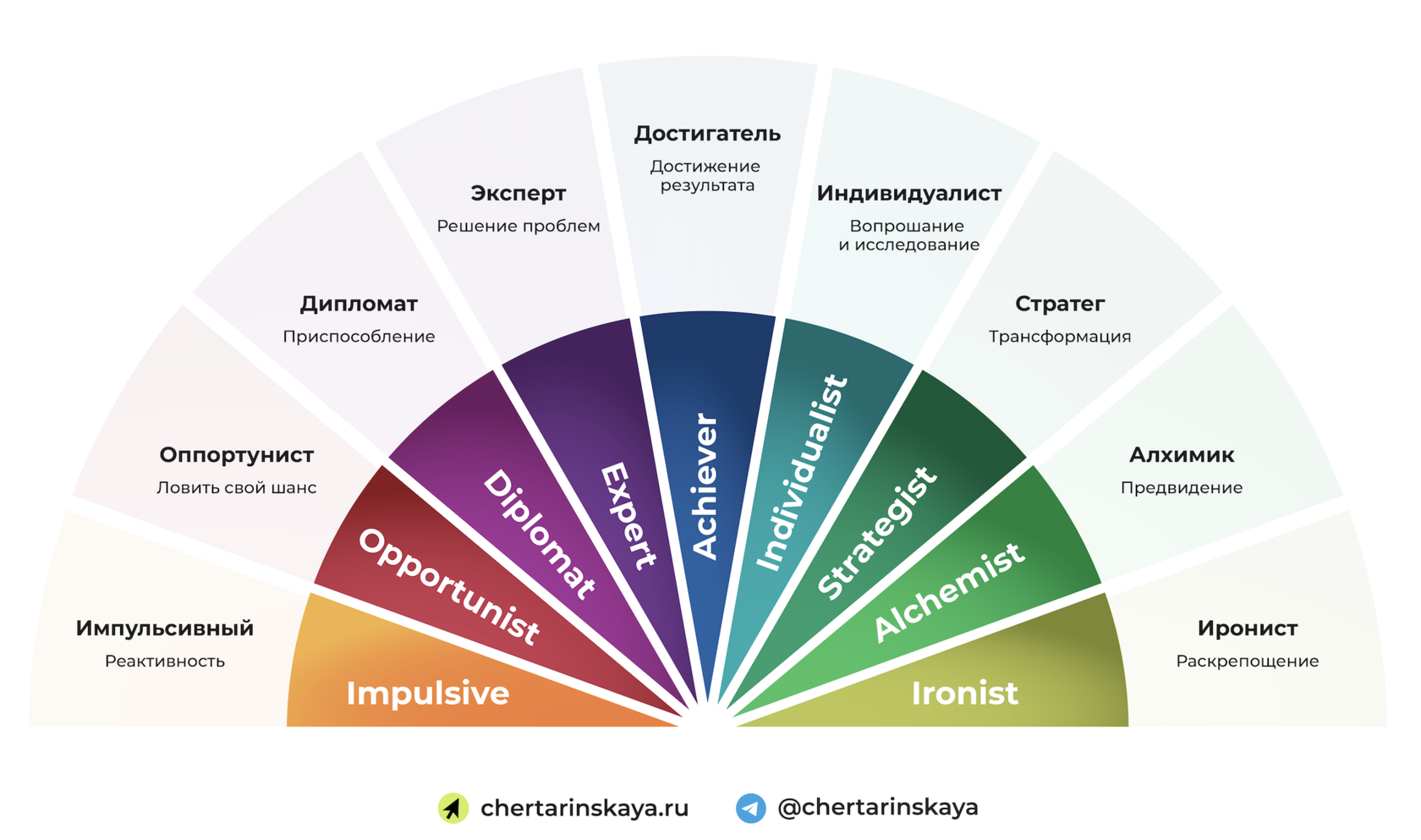
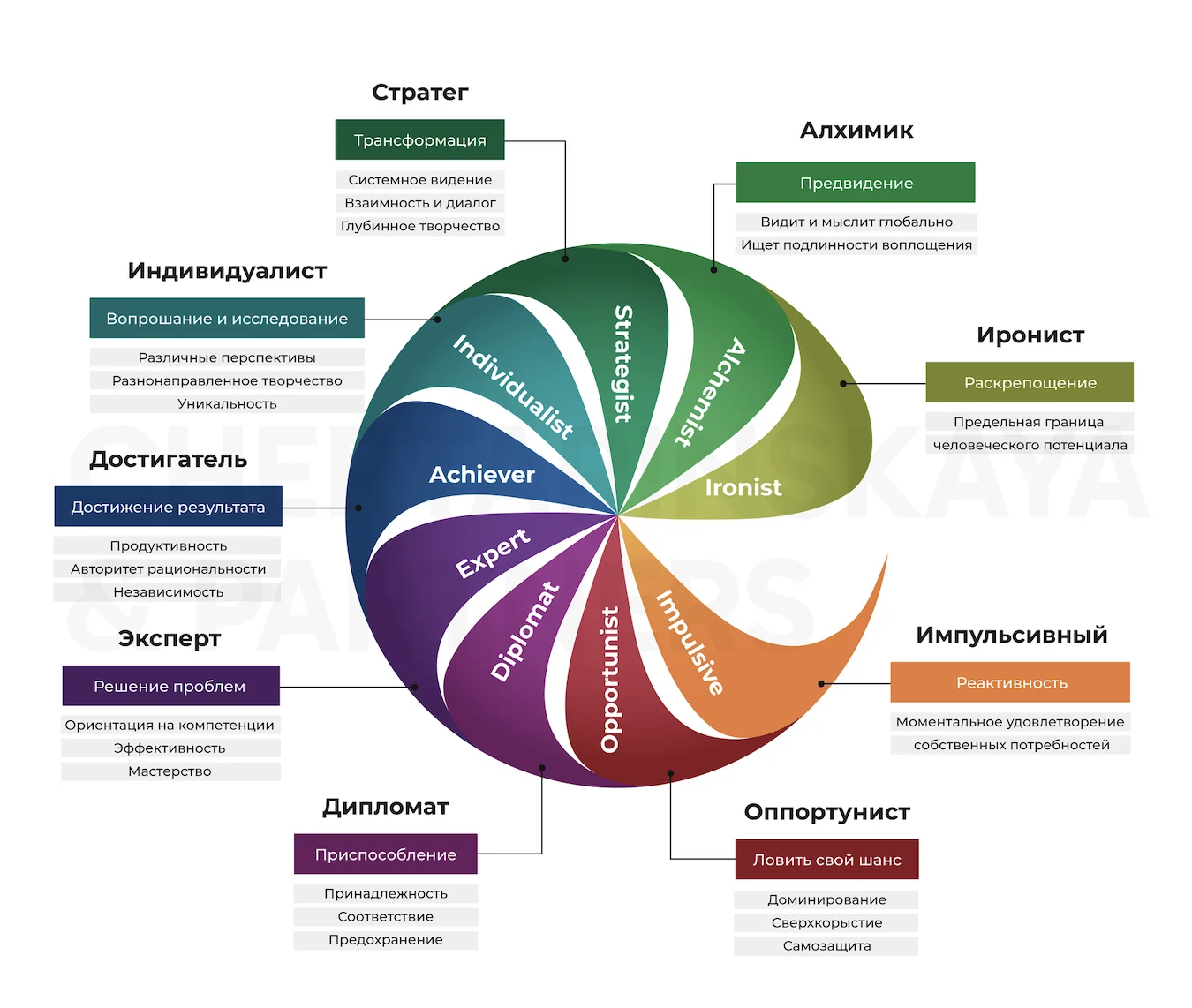
Oriented towards rules, goals and expected standards. These logics work well in a clear environment where order, competence, efficiency and delivery matter.
Reacts quickly and situationally. Oriented towards immediate effect and personal interest. Management is reactive in character.
Good at spotting opportunities and turning situations to advantage. Decisions are made flexibly, but often without a long-term focus.
Oriented towards acceptance and agreement. Follows the rules and expectations of the environment, avoids conflict and preserves stability.
Relies on knowledge, logic and professional competence. Sees the world through the lens of «correct solutions» and quality of execution.
Focuses on goals, results and efficiency. Manages well through KPIs, plans and accountability, and succeeds in a predictable environment.
Oriented towards the system, meaning and transformation. These logics become critical when a leader works not with a single task but with a contradictory system, a culture, a strategy and the long consequences of decisions.
Begins to rethink rules and familiar frames. Sees the limits of existing systems, asks questions and explores alternatives.
Thinks systemically and long term. Able to hold contradictions, build long-range change and transform organisations.
Works with deep transformation of people and systems. Sees interconnections at the level of meaning, culture and the evolution of the whole.
Recognises the relativity of any model or role. Able to step back from identities and work with uncertainty at a meta level.
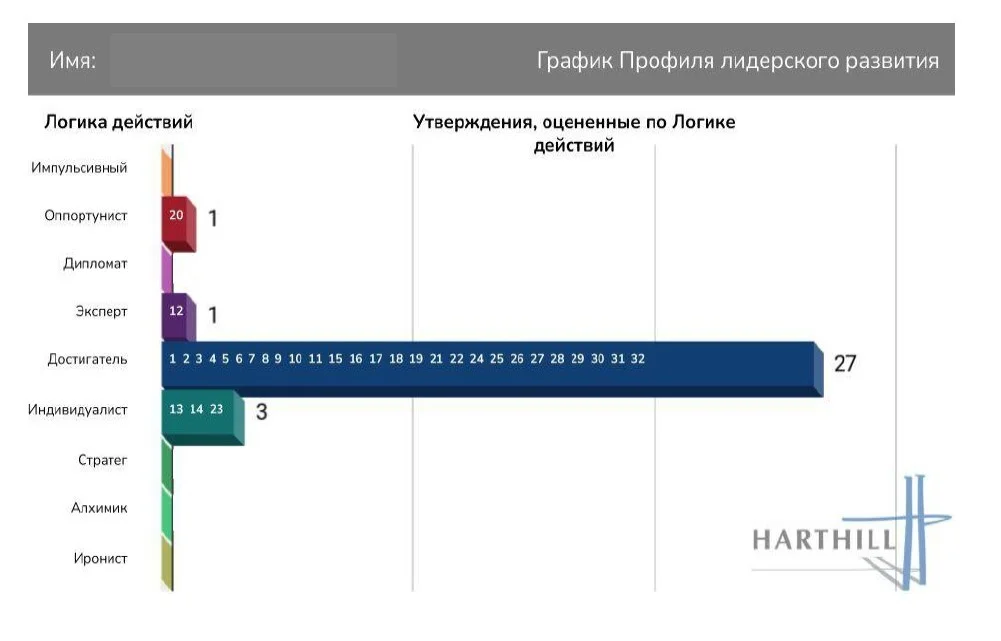
LDP shows the distribution of action logics, not a fixed «type». Different ways of thinking can appear in different contexts — which is why the debrief translates the profile into real management decisions.
Competencies answer the question of what a person can do. Harthill LDP answers a deeper one: from what picture of the world does a leader act when they meet complexity, pressure and contradiction. That is why vertical leadership development cannot be replaced by yet another skills training.
Can be taught quickly, trained and tested through cases.
Determines which decisions a leader even sees as possible and mature.
The outcome of LDP is not a «nice PDF» but a working development map: where your current logic is strong, where it constrains you, and which next step will genuinely expand your managerial capacity.
Your current primary action logic and the additional logics that appear in different management contexts.
How your logic helps you deliver results, influence people, create order or hold complexity.
Where the familiar frame of thinking stops coping: control, being right, conflicting interests, overload, strategic uncertainty.
Not an abstract «growth plan» but the next meaningful step: what exactly to develop in order to expand your capacity to act in complexity.
Reviewing the report in the context of your role, business, team, career crossroads or transformation.
Recommendations for decisions, communication, the leadership role, coaching or an executive development programme.
In Harthill LDP what matters is not only the dominant action logic but which additional logics are already available to the leader. In the debrief this turns into practical conclusions: where the current logic helps, where it constrains, and which next step in vertical leadership development will have the greatest effect.
The basic purchase is not an unsupported test but a package: completion, report and a professional debrief. For corporate programmes the price is calculated for the objective and the number of participants.
If the objective is not «training skills» but raising managerial maturity, LDP can be built into the talent pipeline, executive development, strategy sessions and transformation programmes.
Describe your objective — we will prepare a format for your company
LDP is valuable where you need to see not only a leader's behaviour but the hidden way they make sense of experience — the inner frame from which decisions, influence and managerial constraints arise.
Everything worth knowing before you start Harthill LDP.
LDP answers the question about the level of thinking. For a complete picture it can be combined with instruments for behaviour, motivation and communication.
Hogan shows potential, risks and values. LDP shows the logic from which a leader manages complexity. Together they form a strong executive map.
See Hogan →LDP is about thinking and meaning-making. PCM is about communication, motivation and stress patterns. Useful for teams and leaders.
See PCM →RMP uncovers basic motives, LDP the maturity of thinking. A good combination for career decisions and executive coaching.
See RMP →